The Feature That Almost Made It Into Core
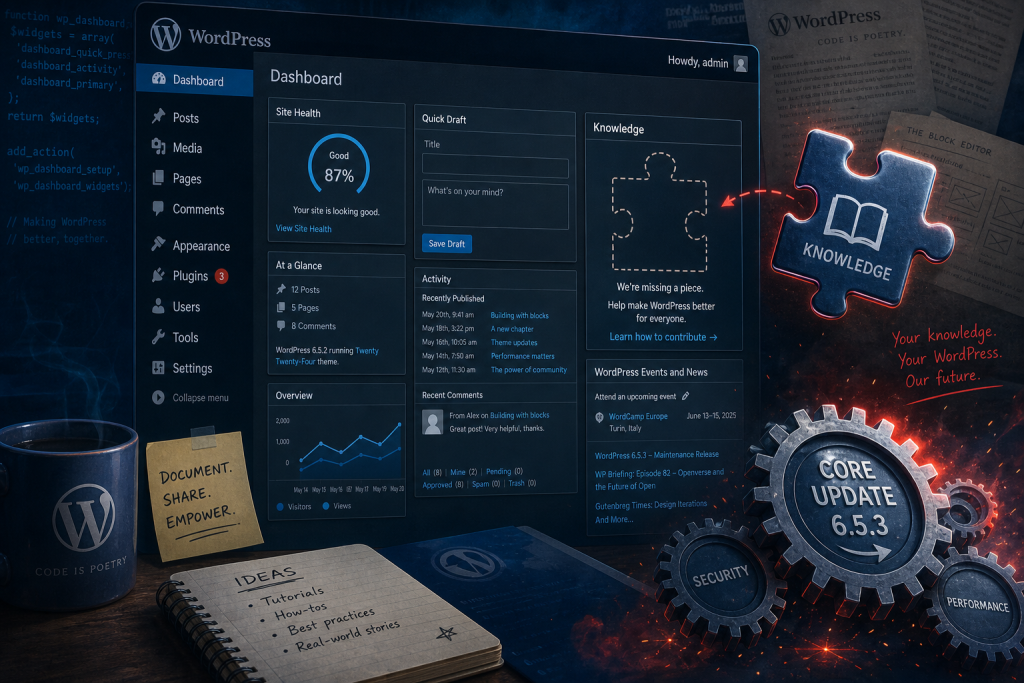
WordPress 7.1 ships August 19, 2026 at WordCamp US. Along with 145+ updates and fixes, it will not include wp_knowledge, a custom post type proposed by Greg Ziółkowski on June 22 that would have given every WordPress site a structured place to store editorial guidelines, conversational memory, and working notes.
The feature wasn’t rejected because the idea is bad. It was rejected because Matt Mullenweg doesn’t want infrastructure in core that hasn’t already proven itself through double-digit week-over-week growth in the real world. Anne McCarthy, the 7.1 release lead, confirmed the decision: “This merge proposal was reviewed with Matt and the result is that this is not going to proceed for 7.1.”
The reasoning is sound. Core is a compatibility commitment that outlives every AI model, API, and vendor in the space. Freezing a knowledge schema too early, before anyone has proven the actual workflow on production sites with real editorial teams, would be a mistake.
But look at what got cut. Not a flashy content generator. Not an image tool. The boring, foundational layer where your site stores what an AI assistant is supposed to know about you.
Why Re-Explaining Your Brand Voice Is a Symptom
Right now, if you use an AI assistant to help manage your WordPress site, you probably do something like this:
- “Write a blog post about our summer sale. Remember, we use a casual, friendly tone. Never use corporate jargon. Always include an SEO excerpt. Our brand color is blue, but don’t mention that in copy. We’re addressing small business owners, not enterprises.”
Every. Single. Prompt.
You’re not doing this because the AI is forgetful. You’re doing it because your brand voice doesn’t live anywhere the AI can access it persistently. It lives in your head, in scattered docs, in a shared Google Drive folder that nobody checks, or in unstructured notes scattered across Slack.
A knowledge layer solves this. It’s a queryable, revision-controlled, permission-aware store for:
- Guidelines: brand standards, tone of voice, messaging rules, audience definitions, style choices that shape every piece of content your AI touches
- Memories: durable context that survives across sessions. “The client prefers first-person perspective.” “We’re shifting away from video tutorials.” “Our product launch is next Tuesday.”
- Notes: private working text, drafts, decision logs, and context that isn’t meant to be public but should inform the AI’s understanding of your site
Once you have this layer, your AI prompt simplifies dramatically. Instead of re-explaining your voice, you say: “Write a post about our summer sale.” The AI loads your guidelines, scans recent memories, and already knows you’re casual, targeting small business owners, and launching next Tuesday.
Why Waiting for Core Is Actually Smart
The veto is an admission: nobody has yet proven the workflow. Not at scale. Not on production sites with messy real-world editorial teams, legacy content, and competing stakeholder preferences.
Agencies know this intimately. They stitch together custom versions for every client, keeping brand voice in PDFs, image direction in shared docs, client-specific rules in wikis, auto-translation rules in plugin settings. None of it is queryable from the editor. None of it survives a CMS migration. None of it integrates with AI assistants because it was never designed to.
If WordPress had shipped wp_knowledge in 7.1 and the proof came later (“actually, this schema doesn’t work for complex organizations” or “the performance hit of querying this on every prompt is brutal”), they’d be locked in. Core updates have to maintain backward compatibility forever. An AI knowledge schema is the opposite of stable. Models change. Retrieval strategies evolve. What works for Claude doesn’t work for Gemini. What works for text doesn’t work for multimodal systems.
The mature move is to let plugins prove the workflow first. Let developers build this on real sites. Let agencies validate the schema with real editorial teams. Let the evidence accumulate. Then if there’s a compelling reason to move it to core (genuine adoption, proven patterns, clear benefits), it can happen from a position of knowledge instead of guesswork.
You Don’t Have to Wait
The veto doesn’t mean you have to wait for 7.1+2 to get a knowledge layer. Plugins can provide this today. The infrastructure exists. The API patterns are known. The missing piece is implementation.
This is where the real work happens. Not in core releases. In the sites where marketing teams are defining their voice, where editors are building memory across sessions, where developers are proving that a persistent knowledge layer actually improves AI-assisted workflows.
For WordPress site owners, the question is direct: Are you still re-explaining your brand to an AI on every prompt? If yes, you’re missing a layer that should already exist on your site, not someday in core but now, as a plugin.
PressBot includes both a Knowledge Base (for public chatbot training) and Agent Memory (for persistent admin AI context) that work on WordPress 6.x and 7.x today, including the WordPress 7 AI foundations PressBot already builds on. The Agent Memory feature does exactly what wp_knowledge was designed to do: save preferences, editorial patterns, and site conventions once, then let the AI reference them across every session. No waiting for core. No custom infrastructure. Just a structured place for your brand voice to live.
The best time to start building the evidence that a knowledge layer works was three months ago. The second-best time is now. Try PressBot’s Knowledge Base and Agent Memory on your site today and help prove that this boring, foundational layer isn’t optional.